



I Events
Introduction
Accurate defect detection is one of the most critical challenges in textile manufacturing. Even small imperfections in fabric can lead to large-scale quality issues, customer complaints, and financial loss.
To solve this problem, modern textile mills are increasingly adopting AI Fabric Inspection systems powered by computer vision and deep learning technologies.
These systems are redefining how Fabric Defect Detection is performed in high-speed production environments.
The Science Behind AI Fabric Inspection
AI Fabric Inspection is built on a combination of computer vision, machine learning, and industrial imaging systems.
At its core, the system is designed to replicate and exceed human visual inspection by analyzing fabric patterns at pixel level accuracy.
Unlike traditional methods, AI does not rely on subjective judgment. Instead, it uses trained models to identify abnormal textures, patterns, and irregularities.
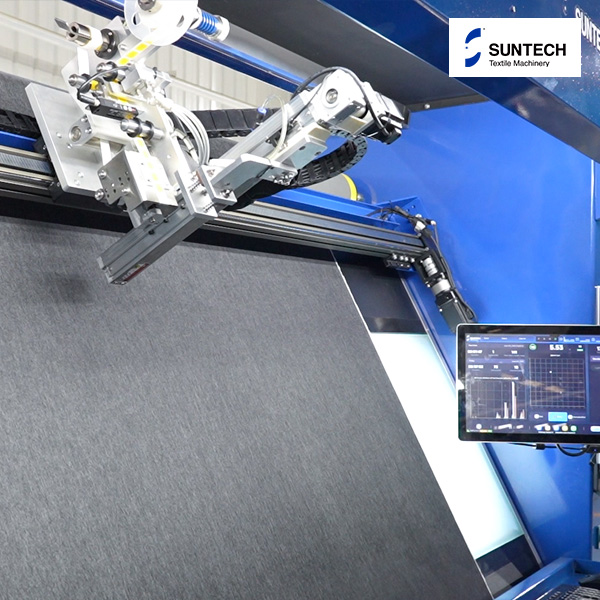
Step-by-Step Fabric Defect Detection Process
Modern AI systems perform Fabric Defect Detection through a structured pipeline:
1.High-Speed Image Capture
Industrial line-scan cameras continuously capture fabric surfaces as they move through production lines.
This ensures no section of fabric is missed.
2.Image Preprocessing
Before analysis, images are enhanced to remove noise and normalize lighting conditions.
This step ensures detection accuracy even under complex factory environments.
3.AI-Based Pattern Recognition
Deep learning models analyze fabric textures and compare them with learned normal patterns.
The system can detect subtle deviations that are often invisible to human inspectors.
4. Defect Classification
Once an abnormal pattern is detected, the system classifies it into specific categories such as:
- Holes
- Stains
- Broken yarn
- Slubs
-
Misweaving patterns
This classification helps factories understand defect sources.
5.Real-Time Output
The system provides Real-Time Fabric Defect Detection, allowing immediate alerts and corrective actions.
Why AI Is More Accurate Than Human Inspection
Human inspection is limited by biological and environmental factors, including fatigue, attention span, and lighting conditions.
AI systems eliminate these limitations by:
- Maintaining consistent detection accuracy 24/7
- Processing thousands of image frames per second
- Detecting micro-level defects invisible to humans
-
Applying uniform standards across all production shifts
As a result, AI significantly improves detection reliability.
Role of Deep Learning in Fabric Defect Detection
Deep learning is the core technology behind modern Fabric Defect Detection systems.
These models are trained on large datasets containing thousands of fabric images, enabling them to learn:
- Normal fabric textures
- Defect patterns
-
Edge cases and rare anomalies
Over time, the system improves its detection accuracy through continuous learning and data accumulation.
Real-Time Fabric Defect Detection in Production Lines
One of the most valuable features of AI systems is Real-Time Fabric Defect Detection.
Instead of detecting defects after production, AI identifies issues instantly during manufacturing.
This enables:
- Immediate defect alerts
- Reduced production waste
- Faster process correction
-
Improved yield rates
Real-time capability is especially critical in high-speed textile mills where delays can lead to large-scale defective output.
Industrial Benefits of AI Fabric Inspection
The adoption of AI Fabric Inspection provides several key advantages:
Higher Accuracy
AI systems can achieve significantly higher detection precision compared to manual inspection.
Scalability
Systems can be deployed across multiple production lines without performance degradation.
Consistency
AI ensures every meter of fabric is inspected under the same standard.
Data Intelligence
All defect data is stored for further analysis, helping manufacturers optimize production processes.
Conclusion
AI-powered systems are transforming Fabric Defect Detection from a manual, subjective process into a highly accurate, automated, and data-driven system.
Through AI Fabric Inspection and Real-Time Fabric Defect Detection, textile manufacturers can significantly improve product quality, reduce waste, and increase operational efficiency.
This technology is rapidly becoming a core requirement for competitive textile production in the global market.