



I Events
In the textile industry, consistent fabric quality is one of the most important factors determining customer satisfaction, brand reputation, and long-term business success. Whether producing denim, knitted fabrics, woven fabrics, or technical textiles, manufacturers must ensure that every roll meets strict quality requirements.
However, maintaining consistent quality is becoming increasingly challenging. High-speed production lines, complex fabric structures, labor shortages, and rising customer expectations make traditional quality control methods more difficult to manage.
This is why more textile manufacturers are adopting AI Fabric Inspection technology. By combining artificial intelligence, computer vision, and automated defect detection, AI-powered inspection systems help textile mills achieve more stable quality control, reduce defects, and deliver consistent fabrics to customers.
Why Consistent Fabric Quality Is a Challenge for Textile Mills
Fabric quality can be affected by many factors throughout the textile production process, including weaving, knitting, dyeing, finishing, and handling.
Even small variations during production can create visible defects that impact the final product.
Common fabric quality issues include:
- Broken yarns
- Missing yarns
- Holes
- Oil stains
- Color differences
- Uneven textures
- Weaving defects
- Knitting defects
- Foreign fibers
-
Surface imperfections
For textile manufacturers supplying global brands, inconsistent quality can lead to customer complaints, production delays, fabric rejection, and increased costs.
The challenge is not only finding defects but also ensuring that every fabric roll is inspected according to the same quality standards.
The Limitations of Traditional Fabric Inspection
For many years, textile mills have relied on skilled inspectors to visually check fabrics. Experienced inspectors can identify many defects, but manual inspection has natural limitations.
The first challenge is inconsistency. Inspection decisions can vary depending on an operator's experience, concentration, and understanding of quality standards. Two inspectors may evaluate the same fabric defect differently.
The second challenge is human fatigue. Fabric inspection requires continuous visual attention, especially when checking large volumes of fabric. Over long working periods, concentration decreases, increasing the possibility of missed defects.
Another challenge is production speed. Modern textile machines operate at increasingly higher speeds, making it difficult for manual inspection teams to maintain accuracy while keeping up with production output.
As a result, traditional inspection methods may create gaps in quality control, especially in large-scale textile manufacturing environments.
How AI Fabric Inspection Ensures More Consistent Quality
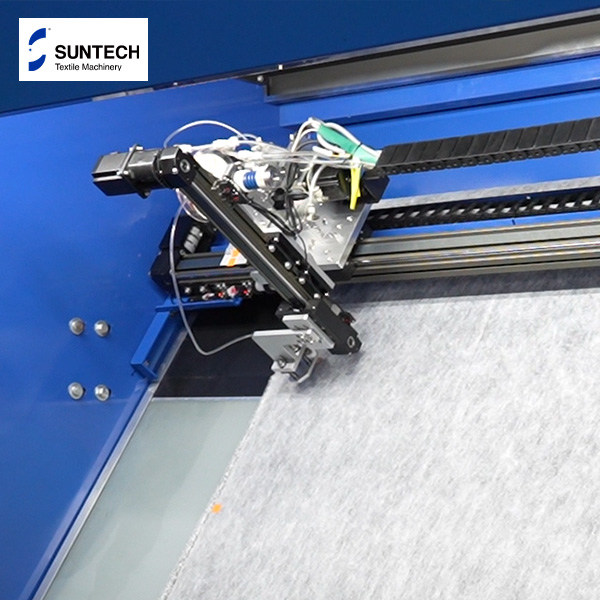
An AI Fabric Inspection System uses high-resolution industrial cameras and deep learning algorithms to automatically monitor fabric surfaces during production or finishing processes.
The system captures images of the fabric in real time and analyzes them using trained AI models. When defects are detected, the system can identify their location, classify the defect type, and record inspection data automatically.
Unlike manual inspection, AI systems maintain the same inspection standards throughout the entire operation.
This helps textile mills achieve:
- More consistent defect detection
- Standardized quality evaluation
- Reduced inspection variation
-
Improved traceability of fabric quality
By removing the impact of human fatigue and subjective judgment, AI creates a more reliable quality control process.
AI Improves Defect Detection Accuracy
One of the biggest advantages of AI Fabric Inspection is its ability to identify defects quickly and consistently.
Traditional manual inspection relies on human vision, which can be affected by lighting conditions, inspection speed, and operator experience.
AI-powered systems use advanced image processing and machine learning technology to analyze fabric surfaces continuously. They can detect small abnormalities that may be difficult to identify during manual inspection.
For textile mills, this means fewer defects are missed during inspection and fewer defective fabrics reach customers.
Early defect detection also allows manufacturers to take corrective actions immediately, preventing larger quality issues from occurring later in production.
AI Creates Data-Driven Quality Management
Traditional fabric inspection usually records limited information. Once a defect is found, manufacturers may know that a problem exists, but they often lack detailed data about when, where, and why it occurred.
AI Fabric Inspection changes this by turning inspection into a data-driven process.
Modern systems can automatically generate:
- Defect maps
- Inspection reports
- Defect statistics
- Quality performance records
-
Production analysis data
This information helps textile mills identify recurring defect patterns and understand the root causes behind quality problems.
For example, if certain defects frequently appear from a specific production line or process stage, manufacturers can investigate and optimize the process before more defective fabric is produced.
Supporting Different Fabric Types and Production Processes
Textile manufacturers produce a wide variety of fabrics with different structures and quality requirements.
AI Fabric Inspection can be applied across multiple textile applications, including:
- Woven fabric inspection
- Knitted fabric inspection
- Denim fabric inspection
- Composite fabric inspection
-
High-value specialty textiles
Whether inspecting lightweight fabrics, elastic materials, or complex woven structures, AI technology provides a flexible solution for improving quality consistency.
Improving Customer Satisfaction Through Better Quality Control
Consistent fabric quality is not only a production goal—it is a key factor in maintaining customer relationships.
When textile mills consistently deliver high-quality fabrics, they can reduce customer complaints, improve delivery reliability, and strengthen cooperation with global brands and garment manufacturers.
AI-powered inspection helps manufacturers build confidence by providing more reliable quality assurance and transparent inspection data.
For customers, this means receiving fabrics with fewer defects and more consistent performance from batch to batch.
The Future of Fabric Quality Control
As textile manufacturing continues moving toward Industry 4.0, intelligent quality control will become increasingly important.
AI Fabric Inspection is not simply replacing traditional inspection methods. Instead, it is helping textile mills create smarter quality management systems where machines handle repetitive inspection tasks while quality teams focus on analysis and continuous improvement.
With ongoing advances in artificial intelligence and computer vision, future inspection systems will become even more accurate, adaptive, and integrated with smart factory platforms.
Conclusion
Delivering consistent fabric quality is one of the biggest challenges for modern textile manufacturers. Traditional inspection methods alone often struggle to meet the demands of high-speed production and increasingly strict customer expectations.
By using AI Fabric Inspection technology, textile mills can achieve more reliable defect detection, standardized inspection processes, and data-driven quality management.
From reducing missed defects to improving production control, AI-powered inspection helps manufacturers produce more consistent fabrics, strengthen customer trust, and remain competitive in the global textile market.