



Not all fabric defects are equally easy to detect with a camera. A hole may stand out clearly, while a weft bar can be difficult to distinguish from the fabric's normal texture.This is why the overall detection rate does not tell the whole story. A system may perform well on some defects but struggle with others, depending on the fabric, lighting, defect size and inspection settings.
For mills considering AI-powered fabric inspection, understanding these differences is a practical first step. This guide groups common fabric defects by detection difficulty and explains what to check before choosing a system.If you are still deciding where to start with automation, read our guide on why it comes first in a mill.
1. Easier to Detect: Clear Shapes and Edges
Holes, missing warp yarns and some broken or loose threads often create visible changes in the fabric surface. Their shapes or edges may differ clearly from the surrounding material, making them easier for a vision system to identify.However, results still depend on the defect's size, the fabric structure and image quality. A small opening in a dense fabric may look very different from a larger hole in an open weave.
When comparing a fabric inspection machine, check its published minimum defect size and ask how that figure was tested. SUNTECH's ST-Thinkor specifications list an inspection speed of up to 80 m/min, a minimum defect size of ≤0.1 mm and an inspection rate of ≥90%. These are product specifications, not a guarantee that every defect will be detected at the same rate.
Explore SUNTECH fabric inspection machines to compare available equipment.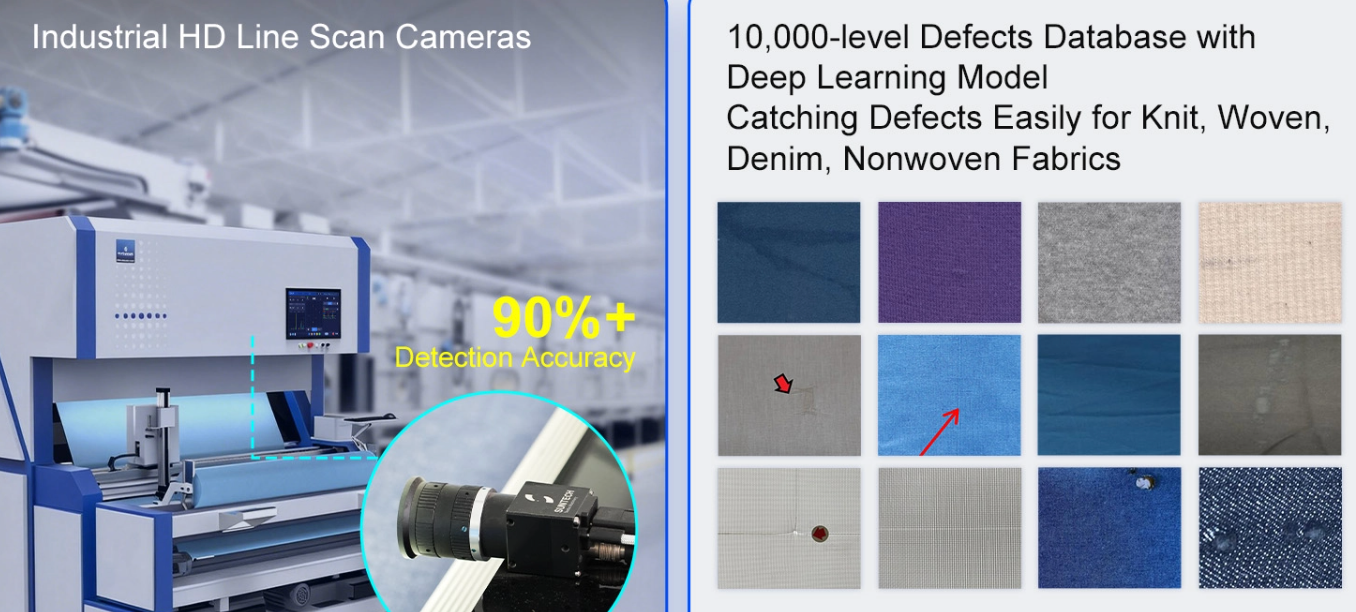 2. Moderate Difficulty: Oil Marks and Colour Differences
Oil stains, soiling and colour bars can be easier to spot when they create a clear contrast with the base fabric. On other materials, the difference may be much less obvious.
For example, an oil mark on a light-coloured fabric may be difficult to distinguish under uneven lighting. The same mark on another fabric may stand out immediately.This is why lighting, fabric colour and inspection settings matter. A fabric defect detection system should be evaluated using the actual materials produced by your mill, rather than a demonstration sample alone.
Before purchasing, prepare samples of common stains and colour variations. Compare the machine's results with those of an experienced inspector, and record both missed defects and false alarms.
Learn more about the ST-Thinkor AI visual inspection system and its published specifications.
3. More Difficult: Texture and Weaving Variations
Weft bars, slubs and uneven fabric density can be more challenging because they do not always have a clear outline. Instead, they change the texture or appearance of an area that already contains a repeating pattern.
A slub is a good example. In some yarns, thicker sections are part of the intended design. In other cases, an unexpected thick section may be considered a defect. The system needs to distinguish between the two.
The same issue applies to weft bars. Their visibility depends on the fabric construction, colour, lighting and the difference between the affected area and the surrounding fabric.For these defects, ask suppliers to test representative samples from your own production. Check whether the system can identify the variations that matter to your quality standards, not simply whether it can detect an unusual pattern.
Finding a defect is only part of the job. Recording its position and linking it to the correct roll can also help quality teams investigate recurring problems. Read our guide on from detection to traceability.
4. Most Challenging: Rare and One-Off Defects
Some defects appear only once in a long roll. Examples include an isolated snag, an unexpected contaminant or an unusual flaw that has not appeared in previous samples.These defects can be difficult to detect because there may be few examples available for testing or training. A system may also confuse an unfamiliar defect with a normal variation in the fabric.
Human inspection remains useful in these situations. The aim is not to assume that a machine can identify every unusual flaw, but to understand which defects it handles reliably and which still require additional checks.During a trial, include rare defects whenever possible. Ask the supplier to explain how unfamiliar patterns are handled and how false alarms are reviewed.
5. Build a Ranking for Your Own Mill
The categories above are a practical starting point, not a universal ranking. The actual difficulty can change with fabric construction, colour, production conditions and the inspection system itself.Start with your defect records from the last three months. List the most common defects, note how often they occur and identify which ones cause the greatest quality problems.
Next, prepare representative samples and test them at your normal production speed. Record the defects detected, the defects missed and any false alarms. Where possible, compare the results across different fabric types.This gives you a more useful basis for evaluating fabric defect detection machines than a single overall detection percentage.
You can compare SUNTECH fabric defect detection machines and discuss which configuration fits your fabric range and production requirements.
Make the Decision Based on Real Fabric
AI-powered fabric inspection can help mills detect defects more consistently and record inspection results. However, performance should always be assessed against the materials and defects found in actual production.
Clear holes and broken yarns may be easier to identify than subtle texture changes or rare defects, but the exact results depend on the application.Before making a purchase, ask for a trial using your own fabric samples.
Check the detection results by defect type, confirm the operating conditions behind the quoted specifications, and make sure the system records the information your quality team needs.A realistic test on your own fabric will tell you far more than a headline detection rate.