



For textile mills, quality control has a direct impact on product consistency, production efficiency, labor costs, and customer satisfaction. Traditional fabric inspection depends heavily on the experience and concentration of QC inspectors. As production speeds increase, maintaining consistent inspection results becomes more difficult.
AI fabric inspection offers a more automated way to handle this challenge. Using industrial cameras and AI algorithms, the system can identify fabric defects during production, record inspection results, and provide useful data for quality control and traceability.
Why Is Traditional Fabric Inspection Becoming More Challenging?
Manual fabric inspection has been part of textile production for decades. It remains an important part of quality control, but faster production speeds and stricter quality requirements are putting more pressure on inspection teams.
One of the biggest challenges is consistency. Inspection results can vary from one operator to another depending on experience, concentration, and fatigue. During long shifts, continuously watching the fabric surface can also increase the chance of missed defects.
Production speed creates another challenge. When fabric is running continuously at high speed, inspectors have very little time to react to small or intermittent defects. At the same time, finding and retaining experienced inspection staff can add to operating costs.
There is also the issue of traceability. If defect information is recorded manually, it can be difficult to determine exactly where a defect was found or to use inspection data for further quality analysis.
For modern textile mills, fabric inspection needs to do more than simply find defects. It should also help manufacturers maintain consistent standards and understand what is happening on the production line.
How Does AI Fabric Inspection Improve Quality Control?
AI fabric inspection changes how fabric inspection is handled on the production line.
Industrial cameras continuously capture images of the moving fabric. AI visual inspection software analyzes the images and identifies potential defects based on the configured inspection model. The system can then record defect locations and related information for quality review.
The basic process is:
Fabric Production → Image Capture → AI Analysis → Defect Detection → Data Recording → Quality Traceability
This approach reduces the need for inspectors to rely entirely on visual observation. It also gives QC teams more consistent inspection data that can be used to identify and address quality problems.
Depending on the AI model, fabric type, and system configuration, automatic fabric inspection systems can be used to detect defects such as holes, stains, broken yarns, slubs, and other common knitting or weaving defects.
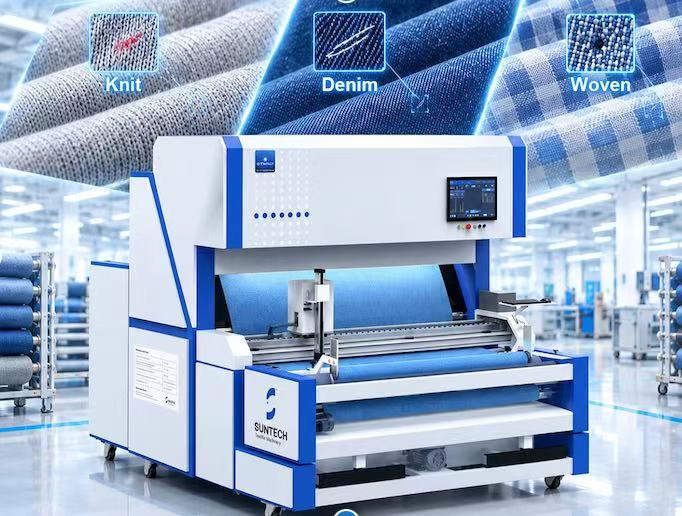
For manufacturers looking to automate this process, SUNTECH's AI Visual Inspection System provides an automated approach to fabric defect detection.
What Benefits Can AI Fabric Inspection Bring?
The value of AI fabric inspection goes beyond automatically finding defects. It can make several parts of the inspection process easier to manage.
More Consistent Inspection
AI inspection systems work according to predefined detection standards. This reduces differences between individual inspectors and helps maintain more consistent inspection results across shifts.
Higher Inspection Efficiency
Automated inspection can run alongside the production line without requiring an operator to continuously monitor the fabric surface. This reduces repetitive visual inspection work and allows QC staff to spend more time reviewing quality issues and improving production processes.
Reduced Reliance on Manual Inspection
For mills that require a large inspection team, automation can reduce the amount of repetitive visual work. It can also help reduce some of the pressure associated with recruiting and training experienced fabric inspectors.
Better Quality Traceability
Instead of relying only on handwritten notes or manual records, inspection results can be stored digitally. Defect locations and related information can then be reviewed when investigating quality problems.
In this way, quality control can move from simply finding defects to using inspection information to understand and improve production.
Which Fabrics Can Use AI Fabric Inspection?
AI visual inspection can be applied to different types of textile fabrics. The actual detection performance depends on the fabric, defect type, camera setup, and AI model.
· Knitted fabrics: Detect common surface defects during production.
· Woven fabrics: Support continuous automated inspection on the production line.
· Denim fabrics: Identify surface defects and other production-related abnormalities.
· Finished fabrics: Support quality checks during production or before shipment.
For knitting mills, woven fabric manufacturers, denim producers, and garment factories carrying out incoming fabric inspection, AI fabric inspection can be integrated into the existing quality control process.For a closer look at the inspection process, see how AI fabric inspection works in modern textile production.
How to Choose the Right AI Fabric Inspection System?
When evaluating an automatic fabric inspection system, inspection speed is only one part of the decision. Textile manufacturers should also consider how well the system fits their actual production requirements.
1. Defect detection capability
Check whether the system can detect the main defects found in your fabrics and whether its AI model can be adapted to your inspection requirements.
2. Production compatibility
Make sure the equipment matches your fabric width, production speed, and existing inspection process.
3. Data and traceability
Consider whether the system can record defect information and provide useful data for QC teams.
4. Future automation needs
If you plan to automate more of the production process, check whether the inspection system can work with cutting, sorting, packing, or ERP/MES systems.
For mills introducing smart manufacturing step by step, a system that can grow with future production needs can be more valuable than one focused only on inspection speed.
Why Choose SUNTECH AI Fabric Inspection?
SUNTECH specializes in textile machinery and automation solutions. Its AI Visual Inspection System uses machine vision and AI technology for automated fabric inspection and can be applied to knitted, woven, greige, and finished fabrics.
Suntech also offers integrated solutions that connect AI visual inspection with other automated processes, including cutting optimization and automatic packing.
For factories moving from traditional manual inspection toward digital quality management, AI fabric inspection provides a practical way to start automating fabric quality control.
Frequently Asked Questions About AI Fabric Inspection
What is AI fabric inspection?
AI fabric inspection uses industrial cameras and computer vision algorithms to examine fabric surfaces and automatically identify potential defects during production.
What defects can AI fabric inspection detect?
The detection range depends on the fabric and AI model. Common applications include detecting holes, stains, broken yarns, slubs, and other fabric surface defects.
Is AI fabric inspection better than manual inspection?
AI can provide more consistent inspection and reduce repetitive manual work. However, actual results depend on the fabric, defect types, production conditions, and system configuration. Human QC staff are still needed for decisions involving customer requirements and subjective quality standards.
Can AI fabric inspection be used for knitted and woven fabrics?
Yes. AI visual inspection can be used for knitted, woven, denim, and other fabric types. The inspection system should be configured according to the specific fabric and defects that need to be detected.
Upgrade Your Textile Quality Control With AI
Textile quality control is gradually moving from traditional manual inspection toward more automated and data-based processes.
AI fabric inspection can help mills improve inspection consistency, reduce repetitive manual work, and keep better records of fabric defects. More importantly, it gives QC teams useful information that can support production decisions.
If your factory is looking for a reliable automatic fabric inspection solution, explore SUNTECH's AI Visual Inspection System and its textile automation solutions.